From Idea to Prototype
About this Course
Steps involved in turning an idea into a working prototype, focusing on design thinking and rapid prototyping techniques
1. Design thinking
This is solution-based approach for problem solving.
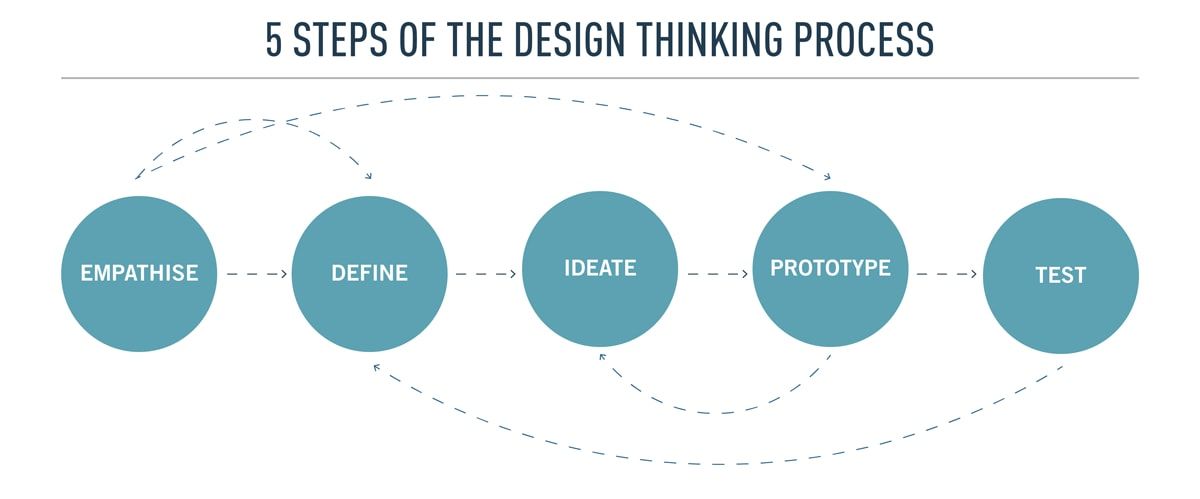
This can be divided into the five phases
This process is a user-centric approach, where we can empathize with the user, and after that define the problem, and get tothe other three processes to making the product.
But if we look at these steps, we cansee the logical sequence, but real process of design thinking is not linear.
Each step gives new answers and discoveries, in which we can get back to the previous step and redefine the things which were done.
Prototype is the fourth stage in design thinking process, and this will be based on everything done so far: learning about user needs, defining the problem and coming up with potential solutions.
2. What is prototype
This is the something that serves as a model or process, where people can implement ideas into the tangible form, which we can use for understanding and learning , to formalize and evaluate ideas.
Prototype allow designers to validate their concept, by using an early version of the solution in front of real users and collecting feedback quickly as possible.
There is four distinct types of prototypes for testing different assumption
3. Rapid Prototyping
Rapid prototyping is the group of techniques used to quickly fabricate a physical part or assembly from a three-dimensional design.
With rapid prototyping engineers and designer can create, better final product through iterations, between digital design and physical prototypes in quick and cost effective way.
3D printing is one of process which can be used for rapid prototyping.
This is addictive fabrication technique, which is different than traditional substractive method.
Rapid prototyping in 3 easy steps
Rapid prototyping prioritizes speed, so it’s limited in scope—but even a quick mockup can stress-test and improve a product design. The three-step rapid prototyping process is basically a loop that repeats until you’ve got a prototype that resonates with your users. The main steps are:
Build. Create mock-ups of a design concept or flow, keeping your users’ needs and company’s goals in mind.
Review. Test your prototype with target users and key stakeholders to learn whether it meets expectations.
Refine. Adjust the prototype based on the feedback you receive.
Low fidelity vs. high fidelity prototypes
The level of fidelity of a prototype is a measure of how closely it resembles the final product.
A low-fidelity prototype, such as a paper sketch, or wireframe, gives a high-level overview but lacks details; it isn’t interactive and can’t be confused with the real product. Low fidelity prototypes are useful for visualizing the most basic building blocks of the app or website but don’t allow users to experience what the final product will be like.
A high-fidelity prototype looks like a real product and mimics normal user interaction. Menus and buttons are clickable, and there’s far more focus on the details – the layouts, logos, images, spacing, and even fonts. High-fidelity prototypes take a bit longer to create but allow stakeholders (and investors) to check design decisions and users to give detailed feedback on specific user journeys.
Rapid prototyping isn’t about perfectionism.
One of the biggest criticisms of rapid prototyping is that it can lead to endless revisions which extend the development time. This often results from the team mismanaging the process, rather than being because of a problem with the concept.
https://careerfoundry.com/en/blog/ux-design/design-thinking-stage-four-prototyping/
https://www.indeed.com/career-advice/career-development/types-of-prototyping
https://formlabs.com/blog/ultimate-guide-to-rapid-prototyping/
https://www.figma.com/resource-library/what-is-rapid-prototyping/
https://devsquad.com/blog/what-is-rapid-prototyping-and-why-is-it-used-in-development
https://maze.co/blog/rapid-prototyping/
Instructor
Info not yet available