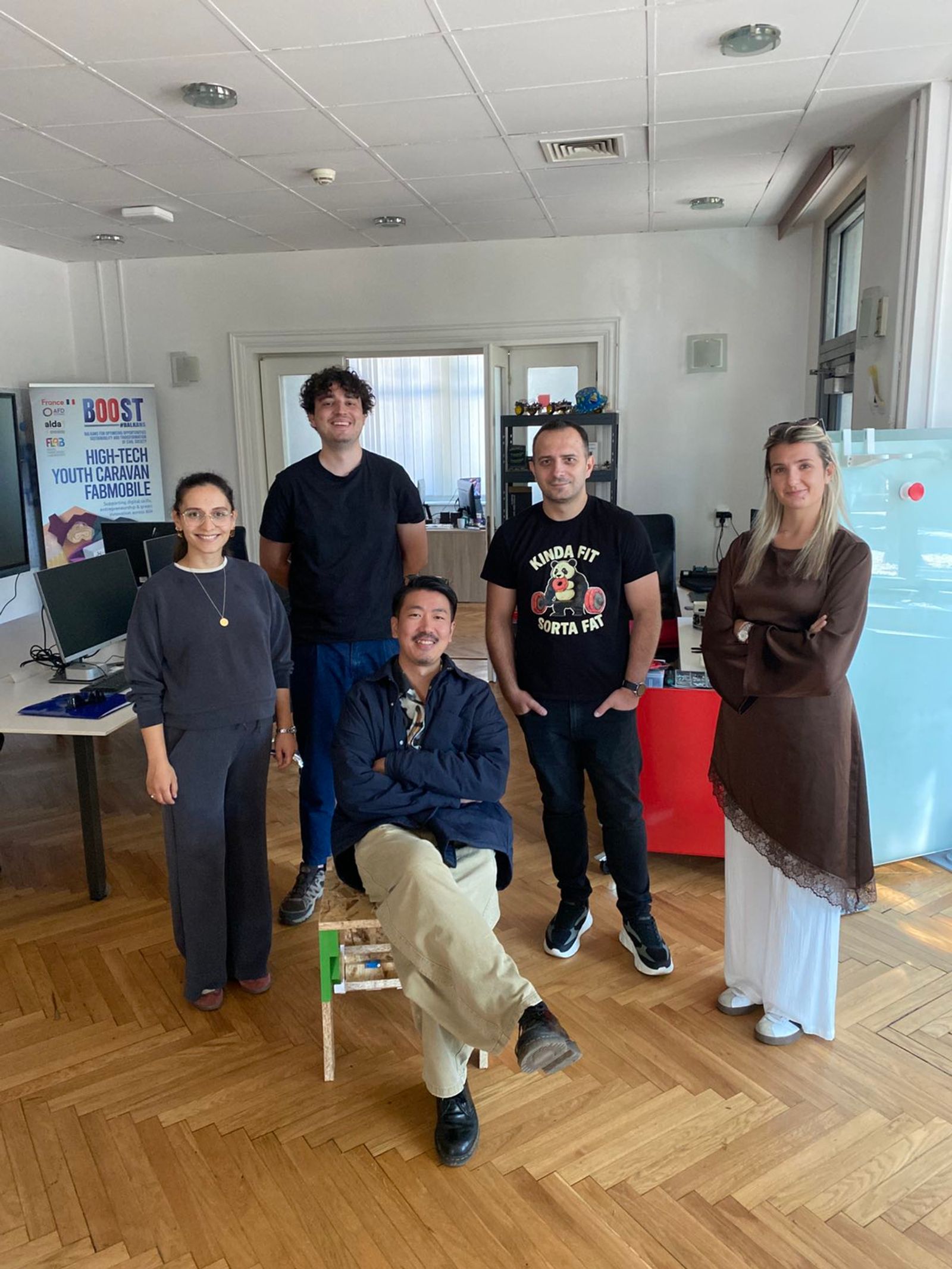
Kiyotaka Inoue, a PhD student in architecture at Nagasaki University in Japan, spent three months at FabLab Bosnia and Herzegovina undertaking a research-based internship connected to his doctoral project. His work explored how 3D printing can support furniture making for people with limited experience in DIY and fabrication.
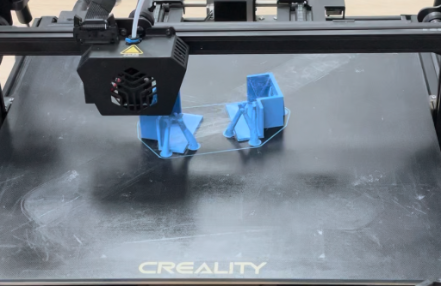
The project focused on developing 3D-printed jigs: physical guides that help users position components, guide tools, drill, cut, and assemble parts. Through the production of a shelf, chair, and desk, Inoue investigated how these guides could support individual tasks and the complete furniture-making process.
Turning Instructions into Physical Guides
Furniture is usually purchased as a finished product, while the knowledge and practical skills needed to make, repair, or modify it can be difficult to access. For beginners, judging position, angle, alignment, and tool direction may create uncertainty. Managing these decisions throughout the making process can present an additional challenge.
Inoue explored how information about position, angle, direction, and sequence could be translated into physical forms. By guiding a tool or holding a component in place, a jig can provide practical support alongside written and visual instructions.
Developing and Testing at FabLab BiH
The first month focused on planning the furniture prototypes and identifying tasks where jigs could provide support. Using Enzo Mari’s Autoprogettazione as a reference, Inoue selected three furniture pieces, created 3D models, and defined the necessary components, dimensions, and materials.
During the second month, he designed, printed, and tested jigs for positioning components, guiding tools, aligning parts, and assisting assembly. The designs were kept simple and compact to reduce printing time and allow reproduction using entry-level 3D printers.
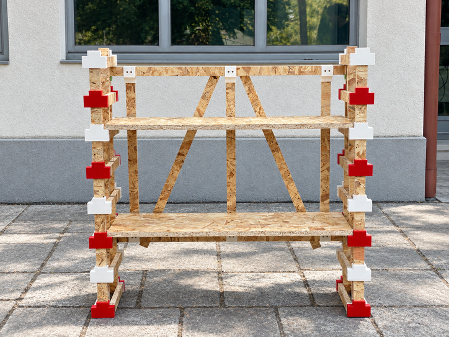
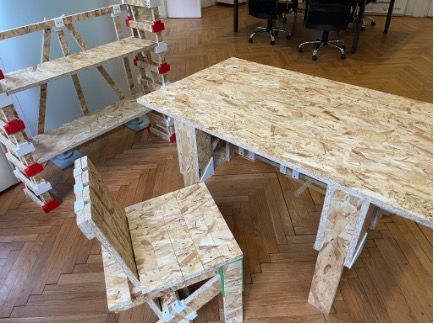
In the third month, the jigs were used to produce a shelf, chair, and desk, made mainly from OSB and timber. This enabled Inoue to test their use throughout preparation, fabrication, and assembly, rather than evaluating them only as isolated tools.
From Making Aid to Furniture Component
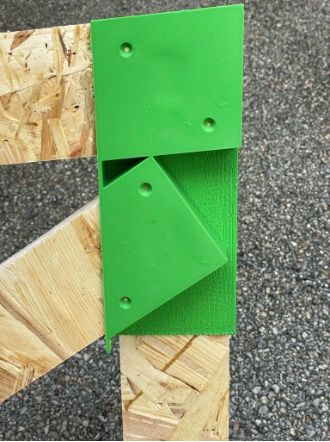
The research also explored jigs that remain attached to the furniture after assembly.
Conventional jigs are generally removed once a task is complete. Some of Inoue’s designs continue to function as supporting or fixing components within the finished furniture. In this approach, the form that guides the making process becomes part of the object itself.
Documentation for Reproduction and Adaptation
The project resulted in three furniture prototypes, editable 3D models, print-ready STL files, and manufacturing instruction sheets. Inoue also documented the main materials, tools, and 3D-printing conditions needed to reproduce the work.
These materials were prepared to support future reproduction, adaptation, repair, and further development by FabLab users and other making communities. Through this work, Inoue investigated how making, using, repairing, and modifying furniture can become a more connected and accessible process.